I'm slowly but surely starting up a new blog address, so head on over there from here on out (the Barone's World tag started feeling a bit tired, and not specific enough considering this entire blog has morphed into a film-related thing, which was the intention all along). First it'll be another three-part, long address, but soon enough it'll be it's own surname-less addy:
TheaterofMine.wordpress.com
[There is a link back to Barone's World in Theater of Mine's blogroll, or "The Essentials," so you can always head back here to check out the archives, catch up, or whatever.]
THEATER OF MINE
Showing posts with label Spread the Love. Show all posts
Showing posts with label Spread the Love. Show all posts
Saturday, May 9, 2009


Wednesday, May 6, 2009
The short film that spawned the great-looking District 9
Last week, I posted a new trailer for Neill Blomkamp's pseudo-documentary-style science fiction flick District 9, which anyone who has seen X-Men Origins: Wolverine in theaters has already caught on the big screen. District 9 has been high on my intrigue scale for months now, and is even more so atop now that the teaser trailer is out and about. And looking awesome, a profound, thoughtful, patient take on the same handheld camera conceit that Cloverfield kicked into overdrive so well.
After researching District 9 over the past week, to obtain as much info as possible, I've uncovered that the film, executive produced by Peter Jackson (Lord of the Rings mastermind), is actually an expanded, bigger-budgeted spin on Blomkamp's 2005 short film Alive in Joburg, a commentary on the Apartheid in South Africa set against the aftermath of an alien invasion. The government has forced the now-residential extraterrestrials into servitude, not exactly what the aliens came to Earth in hopes of. The ETs are looked down upon as smelly, unwelcome, and inferior. That opinion serving as a newfound line of commonality between once-bickering races and social classes, all at the expense of the unassuming aliens.
Blomkamp's short film is available on Youtube, thankfully, and it's quite good. Give it a look, it's hardly seven minutes long:
Now, for comparison's sake, here's the new District 9 teaser:
District 9 hits screens on August 14. I'll be there, possibly at a midnight showing if any are scheduled.
After researching District 9 over the past week, to obtain as much info as possible, I've uncovered that the film, executive produced by Peter Jackson (Lord of the Rings mastermind), is actually an expanded, bigger-budgeted spin on Blomkamp's 2005 short film Alive in Joburg, a commentary on the Apartheid in South Africa set against the aftermath of an alien invasion. The government has forced the now-residential extraterrestrials into servitude, not exactly what the aliens came to Earth in hopes of. The ETs are looked down upon as smelly, unwelcome, and inferior. That opinion serving as a newfound line of commonality between once-bickering races and social classes, all at the expense of the unassuming aliens.
Blomkamp's short film is available on Youtube, thankfully, and it's quite good. Give it a look, it's hardly seven minutes long:
Now, for comparison's sake, here's the new District 9 teaser:
District 9 hits screens on August 14. I'll be there, possibly at a midnight showing if any are scheduled.
Monday, May 4, 2009
Netflix Fix -- Metropolis (1927)
How this film was made in 1927 is something that I'm truly confused by (in a less-than-literal sense), because Metropolis (1927) has such a behemoth scope and is full of so many forward-thinking themes that it'd be impossible for today's filmmakers to ever up its ante with any remake or revision. Considered one of the, if not the, most influential of all silent films, Metropolis is a film that any person in love with science fiction, or just fantasy storytelling in general, must see at least once in his/her lifetime. Which is exactly why I recently bumped it to the top of the Netflix Queue, a necessary action to rectify the sad issue of having slept on it for so damn long.
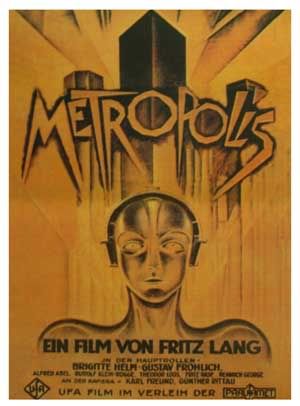
German director Fritz Lang's "masterpiece" (as its hailed by film scholars and writers alike, rightfully so) is such an artifact that its original print is long gone, but thankfully a close representation of that print has been pieced together for DVD through negatives and other crafty means. For instance, scenes lost from the original print are explained in on-screen text, often times four individual paragraphs in a row for extended chunks of missing reel. This doesn't hurt the experience, fortunately. What Lang captured was so massive that, no matter what year or under what context the film is seen, Metropolis feels like a big budget spectacle. Realize that this was conceived in 1927, though, and it's downright mindblowing. The explosions are all convincing, the finale's huge flash flood that engulfs hundreds of acting extras is flawless, and the pre-Frankenstein laboratory lightshow scenes are visually extraordinary.
Even the plot is ahead of it's then-time. Set in the year 2026, the film takes places in Metropolis, a progressive fictional city run by Joh Frederson, a wealthy leader who operates with subdued coldness rather than any unhinged tyranny. Frederson has divided the city into two factions: the slave-like workers who are forced to live underground and the upper class that gets to enjoy the fruits of Metropolis' utopian-like landscape. His son, Freder, wants to unite the two groups, though, and decides to live amongst the lowly workers. But when a revolt begins brewing within the workers' society, Frederson and a mad scientist named Rotwang intervene in pretty wild sci-fi ways. Metropolis: Rise Against the Machines would've been a fitting longer title.
Metropolis is also a haunting beast to sit with, due in no small part to its black-and-white, silent film aesthetic. Call me a bit soft, but silent films tend to creep me out more so than loud fare. No film has given me more nightmares than the FW Murnau/Max Schrek paralyzer Nosferatu (1922), and not many horror flicks can rip into the depths of my skin like Carl Dreyer's expressionist creepshow Vampyr (1932). Metropolis isn't scary in the same sense of those silent films, but Lang's movie features several images that are tough to forget. There's a Grim Reaper figure that stands alongside a lineup of minions that came out of nowhere and took Metropolis into an unexpected, momentary supernatural zone. The vacant black eyes of the cast, paired with the exaggerated acting needed to convey emotions in silent films, give the film an otherworldly quality inherent to unease, a trait used to perfection in a shot that fills the entire screen with floating, peeled-open-in-amazement eyeballs.
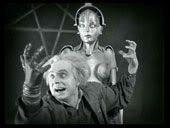
The lab scene (though with different music; this isn't the score heard in Lang's film):
Metropolis is two hours long (including an "Intermezzo," or intermission), but it doesn't feel that long. I'll admit, the two-hour-length was intitially intimidating. I wasn't sure if I'd be able to make it through a silent film of such length, only because it's been a long-ass time since I've watched a silent. In no way was I expecting the film to be as convincingly brolic in scope as it is, though, so its runtime became frivolous once the show got on the road.
It may have taken me much longer than it should have to sit down with Metropolis, free of distraction, but since when is lateness irreconcilable? Besides, I'll have plenty of time to catch up now that I'm unable to shake the film out of my brain.

German director Fritz Lang's "masterpiece" (as its hailed by film scholars and writers alike, rightfully so) is such an artifact that its original print is long gone, but thankfully a close representation of that print has been pieced together for DVD through negatives and other crafty means. For instance, scenes lost from the original print are explained in on-screen text, often times four individual paragraphs in a row for extended chunks of missing reel. This doesn't hurt the experience, fortunately. What Lang captured was so massive that, no matter what year or under what context the film is seen, Metropolis feels like a big budget spectacle. Realize that this was conceived in 1927, though, and it's downright mindblowing. The explosions are all convincing, the finale's huge flash flood that engulfs hundreds of acting extras is flawless, and the pre-Frankenstein laboratory lightshow scenes are visually extraordinary.
Even the plot is ahead of it's then-time. Set in the year 2026, the film takes places in Metropolis, a progressive fictional city run by Joh Frederson, a wealthy leader who operates with subdued coldness rather than any unhinged tyranny. Frederson has divided the city into two factions: the slave-like workers who are forced to live underground and the upper class that gets to enjoy the fruits of Metropolis' utopian-like landscape. His son, Freder, wants to unite the two groups, though, and decides to live amongst the lowly workers. But when a revolt begins brewing within the workers' society, Frederson and a mad scientist named Rotwang intervene in pretty wild sci-fi ways. Metropolis: Rise Against the Machines would've been a fitting longer title.
Metropolis is also a haunting beast to sit with, due in no small part to its black-and-white, silent film aesthetic. Call me a bit soft, but silent films tend to creep me out more so than loud fare. No film has given me more nightmares than the FW Murnau/Max Schrek paralyzer Nosferatu (1922), and not many horror flicks can rip into the depths of my skin like Carl Dreyer's expressionist creepshow Vampyr (1932). Metropolis isn't scary in the same sense of those silent films, but Lang's movie features several images that are tough to forget. There's a Grim Reaper figure that stands alongside a lineup of minions that came out of nowhere and took Metropolis into an unexpected, momentary supernatural zone. The vacant black eyes of the cast, paired with the exaggerated acting needed to convey emotions in silent films, give the film an otherworldly quality inherent to unease, a trait used to perfection in a shot that fills the entire screen with floating, peeled-open-in-amazement eyeballs.
The lab scene (though with different music; this isn't the score heard in Lang's film):

Metropolis is two hours long (including an "Intermezzo," or intermission), but it doesn't feel that long. I'll admit, the two-hour-length was intitially intimidating. I wasn't sure if I'd be able to make it through a silent film of such length, only because it's been a long-ass time since I've watched a silent. In no way was I expecting the film to be as convincingly brolic in scope as it is, though, so its runtime became frivolous once the show got on the road.
It may have taken me much longer than it should have to sit down with Metropolis, free of distraction, but since when is lateness irreconcilable? Besides, I'll have plenty of time to catch up now that I'm unable to shake the film out of my brain.
Wednesday, April 29, 2009
Remember The Goonies? Of course you do. Get a load of this.....
London's Empire Magazine, aka my favorite magazine out there that rapes my wallet with that damn $10 import price, has given those in my generation a reason to transport back to more innocent, and frankly better, days in their current 20th Anniversary issue, guest edited by none other than Steven Spielberg. Since Spielberg was one of the film's executive producers (as well as the guy who came up with the film's original story), 1985's kids classic The Goonies seemed like prime reunion material for the folks at Empire to attempt to pull off, and holy shit did they do it: Corey "Mouth" Feldman, Sean "Mikey" Astin, Josh "Brand" Brolin, Jeff "Chunk" Cohen, Kerri "Andy" Green, Martha "Stef" Plimpton, Jonathan "Data" Ke Quan, and the film's director, Richard Donner. All in one room, reminiscing and genuinely have a great time.
I dare any of you to watch this video, courtesy of Empire (yet again....damn those guys are good), and not wish you were a young'n again and that you could see The Goonies for the first time. One-Eyed Willie, Sloth, and all. [By the way, if you've never seen The Goonies, I don't think I want to know you. That's just sad]
Worth noting: Did Sean Astin and Jeff Cohen trade bodies or something? Chunk is no longer chunky, and Mikey looks like he ate too much Life cereal with 2% milk.
Also Worth Noting: Kerri Green is still sexy as hell.
Much respect goes to (for executing this wonderful reunion): Empire
I dare any of you to watch this video, courtesy of Empire (yet again....damn those guys are good), and not wish you were a young'n again and that you could see The Goonies for the first time. One-Eyed Willie, Sloth, and all. [By the way, if you've never seen The Goonies, I don't think I want to know you. That's just sad]
Worth noting: Did Sean Astin and Jeff Cohen trade bodies or something? Chunk is no longer chunky, and Mikey looks like he ate too much Life cereal with 2% milk.
Also Worth Noting: Kerri Green is still sexy as hell.
Much respect goes to (for executing this wonderful reunion): Empire
Friday, April 17, 2009
In appreciation of Lucky McKee's May.....

It's not often that a horror film made within the last ten years blows me away solely with its originality, but that's exactly what Lucky McKee's May (2002) has done. May is a wolf in sheep's clothing, a film unfairly hurt by the prejudice-ready trappings of its central plot. Awkward outcast female yearns for social acceptance, falls for a guy, gets rejected, flies off the deep end, and breaks loose some gruesome hell. At first, the film feels like "The Post-College Adventures of Stephen King's Carrie." But McKee has several tricks up his sleeve here, the most important of which being the patience to develop his May character to the hilt before unleashing her psychotic side. By the time her inner darkness is exposed, the character totally charmed my socks off with her goth-chick cuteness and compelling weirdness. Even as she sliced and diced, I was right there with her, cheering her on and hoping she'd emerge alive and happy.
This being an independent horror film devoid of big studio involvement and a need to please the masses, that of course doesn't happen. May works so well because nothing that happens from the 45-minute mark forward is expected. McKee consistently surprised me with May's plot turns and sadistic derailment, made all the more enjoyable thanks to a stellar lead performance from otherwise-unknown actress Angela Bettis, who owns this film from Fade In to Fade Out. Bettis handles a rollercoaster of a role with constant command, making May's pleasant moments seem believably sweet and her darkest actions feel completely warranted.
The way McKee develops the character, May comes from a friendless childhood that resulted from a terribly-lazy eye. Her sluggish eyeball gave her douchebag kiddie peers ample fodder to ridicule May, and she ran the course of life with no friends or companions other than a creepy white-faced doll that her mom handmade for her, which she calls "Suzy." Only, Suzy talks to May (the chick is crazy, you dig?) and tells her what to do in certain situations, most consequential being the intimate moments May shares with her crush and first-ever suitor, Adam (played by Jeremy Sisto, who you'd know from Clueless and Wrong Turn).


I don't want to spoil the surprises that May's story has in store, so seek this one out to see where tragic outcast May's tale goes. Trust me---it's not where you'd suspect, and it'll make you squirm and sympathize in equal measure. For the first hour, May is in no way a horror film; it's a dark, dramatic character study of a girl lacking in any social skills whatsoever. So much so that every encounter she has, whether it be with Adam or a group of blind children she volunteers to look after, left me feeling uneasy, unsure of what she'd do at any given second. I couldn't trust the character, but that doesn't mean that I didn't like her.
May is Snicker-thick with moments that payoff beautifully by story's end. As the resolution was unfolding, I found myself clicking back to small details packed within past scenes, thinking "Oh shit!" as loose ends tied themselves. Earlier moments that felt random all began to make crystal-clear sense. McKee's script turns out to be one that required much fine-tuning. Like a giant puzzle that's constantly falling into place without the viewer ever realizing it until the final frames.
Bonus points go to McKee and May for utilizing a young Anna Faris tons of scenery to chew on. Playing a promiscuous lesbian co-worker of May's who has a big thing for our heroine, Faris is a spark plug here, off-setting the film's thick grimness with her slutty flirtations and naive airhead ways. Oh, and Faris is hotter than ever here. Case in point:

If you've ever felt closed off from the cool kids, or simply unable to establish quality friendships, May will definitely strike a chord. You'll have to clutch your stomach and endure the endgame carnage, all played with a nice touch of realism rather than any Grand Guignol, but it's well worth the gag reflex. Going into the film, I wasn't expecting to love May as much as I now do. A slew of positive horror-writer reviews and McKee's commendable adaptation of Jack Ketchum's novel The Lost were all I had as reasons to watch on a quiet Friday evening. In the end, though, May and her poetic descent into the macabre left me feeling a mess of emotions. The most prominent being "empathy."
For a horror flick, that's a job well done.

Thursday, April 16, 2009
Rashomon, or the beginning of my Kurosawa phase
Seriously, how bad was last year's Vantage Point? What a case of cinematic blue balls. Easily one of 2008's biggest letdowns on my end, a film that first surfaced with a live-wire, eye-opener of a trailer but then materialized with uneve acting, a muddled script, and an irritating creative decision to rewind the tape every time the perspective changed between characters. The first time the film went all fast-paced backward, I cringed but figured that Pete Travis, the director, wouldn't be misguided enough to do it again. But then it happened again, and again, and then once more, and then about three more times. Until the audience in my theater began laughing and/or sighing in disbelief at each "rewind." Didn't help that Matthew Fox turned in a painfully bad performance, Dennis Quaid just looked one-note pissed the entire time, and cutie Zoe Saldana was killed off in the first ten minutes.
Be gone, Vantage Point. Be gone.
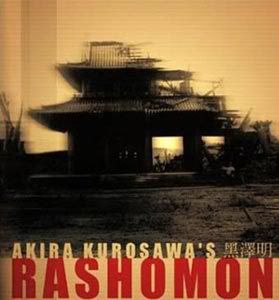
Now having finally watched iconic Japanese director Akira Kurosawa's awesome Rashomon (1950), I've seen what Travis and company were admirably trying to do but failed on all fronts. Really, Rashomon makes me hate Vantage Point even more. It's not exactly fair, though, to compare the two films; it's like trying to draw a parallel between Robert Wise's The Haunting and The Haunting in Connecticut. Just plain ridiculous. Rashomon is one of the finest, most influential films ever made, so Vantage Point never stood a chance, anyway.
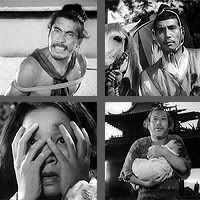
The same narrative trick is attempted in both----trying to solve a crime by showing the event through the eyes of multiple characters, only to reveal that "truth" is merely in the eye of the beholder. One of the many reasons that Rashomon so greatly pulls this storytelling okie-doke off is that the actual truth is never given. All we're left with is four vastly different accounts of a rape/murder in the woods. The final version could be regarded as the most reliable, only because it's from an objective witness with no ties to the bandit, the rape victim, and her now-dead husband. Or, does he? The witness turns out to have some unexpected stake in the case, which blurs the lines of reality even further, and leaves Rashomon's central verdict open-ended as the Fade Out comes.
It's pretty astonishing to think that Kurosawa executed such a groundbreaking, twisty tale nearly 60 years ago. Truly light years ahead of his time with this. Early on, I thought I was in for a murder mystery, but then the killer's identity is confessed by the deviant himself, which threw my frame-of-mind off the rails. So he's the killer then? So what else is left to figure out? What a fool I was to think that. As soon as the hysterical rape victim begins offering her recollection to the courthouse, I started asking her questions, but in my head. "Why are you so upset when the bandit just told us that you were fierce and heroic?" A wonderful little device used by Kurosawa here came into the light at this moment---I realized that we're never going to see the interrogator, only the defendants. As if they're speaking directly to the viewer. Answering our questions, confusing our thoughts with each changing speaker. Truth is totally subjective, and it changes through small yet thematically large details with each new defendant.
Rashomon is a film that I can't recommend enough. For those partial to martial arts and fight scenes, you get some pretty badass sword fighting. If you're a movie-watcher such as myself who loves a good wildly-structured headscratcher, it's tops. But ultimately, it's worth seeing just off of GP alone. You'd be hard-pressed to find a filmmaker who won't admit to being heavily influenced by not only Rashomon, but Akira Kurosawa himself.
I may go watch it again now. Or tomorrow, definitely. Hell, the film even managed to creep me out quite a bit thanks to an eerie testimonial from a freaky-deeky female medium giving the murder victim's side of the story. And I wasn't expecting this one to give me any willies at all. Many so-called "horror legends" can't even do that.
Be gone, Vantage Point. Be gone.

Now having finally watched iconic Japanese director Akira Kurosawa's awesome Rashomon (1950), I've seen what Travis and company were admirably trying to do but failed on all fronts. Really, Rashomon makes me hate Vantage Point even more. It's not exactly fair, though, to compare the two films; it's like trying to draw a parallel between Robert Wise's The Haunting and The Haunting in Connecticut. Just plain ridiculous. Rashomon is one of the finest, most influential films ever made, so Vantage Point never stood a chance, anyway.
The same narrative trick is attempted in both----trying to solve a crime by showing the event through the eyes of multiple characters, only to reveal that "truth" is merely in the eye of the beholder. One of the many reasons that Rashomon so greatly pulls this storytelling okie-doke off is that the actual truth is never given. All we're left with is four vastly different accounts of a rape/murder in the woods. The final version could be regarded as the most reliable, only because it's from an objective witness with no ties to the bandit, the rape victim, and her now-dead husband. Or, does he? The witness turns out to have some unexpected stake in the case, which blurs the lines of reality even further, and leaves Rashomon's central verdict open-ended as the Fade Out comes.
It's pretty astonishing to think that Kurosawa executed such a groundbreaking, twisty tale nearly 60 years ago. Truly light years ahead of his time with this. Early on, I thought I was in for a murder mystery, but then the killer's identity is confessed by the deviant himself, which threw my frame-of-mind off the rails. So he's the killer then? So what else is left to figure out? What a fool I was to think that. As soon as the hysterical rape victim begins offering her recollection to the courthouse, I started asking her questions, but in my head. "Why are you so upset when the bandit just told us that you were fierce and heroic?" A wonderful little device used by Kurosawa here came into the light at this moment---I realized that we're never going to see the interrogator, only the defendants. As if they're speaking directly to the viewer. Answering our questions, confusing our thoughts with each changing speaker. Truth is totally subjective, and it changes through small yet thematically large details with each new defendant.

Rashomon is a film that I can't recommend enough. For those partial to martial arts and fight scenes, you get some pretty badass sword fighting. If you're a movie-watcher such as myself who loves a good wildly-structured headscratcher, it's tops. But ultimately, it's worth seeing just off of GP alone. You'd be hard-pressed to find a filmmaker who won't admit to being heavily influenced by not only Rashomon, but Akira Kurosawa himself.
I may go watch it again now. Or tomorrow, definitely. Hell, the film even managed to creep me out quite a bit thanks to an eerie testimonial from a freaky-deeky female medium giving the murder victim's side of the story. And I wasn't expecting this one to give me any willies at all. Many so-called "horror legends" can't even do that.

Wednesday, April 15, 2009
***The BW List: Car Scenes, Glaring Omission
Honestly, I'm hugely ashamed of myself. A couple weeks back, I compiled a few of my all-time favorite film scenes involving automobiles in light of that week's Fast & Furious opening. The problem I've been having with these lists I've been putting together is that my head works so quickly, so many streams of thought flowing side by side, that I tend to overlook films and scenes that wholly deserve inclusion.
And just now, while watching some late night cable, I came across one of my favorite films of the last decade, Children of Men. So brilliant, so sadly passed over by the Academy that awards season. Amongst several others, one aspect of the film that I continue to find so astonishing is Alfonso Cuaron's hyper-realistic direction. Don't even get me started on that seemingly-single-take climax, because I'll just ramble on and on about its unparalleled excellence. In the same vein of love, though, is my fondness for this scene, which (SPOILER ALERT) kicks the film's plot into overdrive. Its another one of Cuaron's masterful "single shot takes" earlier in the film, an unexpected siege on the main characters' car that escalates into a crescendo of horror and tragedy. Cuaron took an approach that had been used before and perfected it----sewing together a bunch of separate shots and making them seem as if its one continuous take.
**I remember when I interviewed Chiwetel Ejiofor (the driver of the car in the scene) for a KING story, I snuck in a question asking how exactly Cuaron pulled this scene off, to which he laughed and gave me one of those "I can't spoil the secret, now" responses that I simultaneously understand, respect, and selfishly loathe. Landing the man Chiwetel Ejiofor for a six-page feature story/shoot in KING will forever go down as my proudest accomplishment while working for the mag. Took months to secure, defied perceptions of the mag, and realized my hopes of giving the mag some Hollywood credibility. They can't take that one away from me. Ever.**
If you've yet to see Children of Men, please do so with the quickness. And think twice about watching this scene, 1) because the picture quality isn't the best, and 2) the film deserves to be seen in its entirety and total context. But for the short-of-will-power and fans of the film, here's the "car attack" scene that should've been at least second-slotted on my previous BW List: Favorite Car Scenes. It's something else:
And just now, while watching some late night cable, I came across one of my favorite films of the last decade, Children of Men. So brilliant, so sadly passed over by the Academy that awards season. Amongst several others, one aspect of the film that I continue to find so astonishing is Alfonso Cuaron's hyper-realistic direction. Don't even get me started on that seemingly-single-take climax, because I'll just ramble on and on about its unparalleled excellence. In the same vein of love, though, is my fondness for this scene, which (SPOILER ALERT) kicks the film's plot into overdrive. Its another one of Cuaron's masterful "single shot takes" earlier in the film, an unexpected siege on the main characters' car that escalates into a crescendo of horror and tragedy. Cuaron took an approach that had been used before and perfected it----sewing together a bunch of separate shots and making them seem as if its one continuous take.
**I remember when I interviewed Chiwetel Ejiofor (the driver of the car in the scene) for a KING story, I snuck in a question asking how exactly Cuaron pulled this scene off, to which he laughed and gave me one of those "I can't spoil the secret, now" responses that I simultaneously understand, respect, and selfishly loathe. Landing the man Chiwetel Ejiofor for a six-page feature story/shoot in KING will forever go down as my proudest accomplishment while working for the mag. Took months to secure, defied perceptions of the mag, and realized my hopes of giving the mag some Hollywood credibility. They can't take that one away from me. Ever.**
If you've yet to see Children of Men, please do so with the quickness. And think twice about watching this scene, 1) because the picture quality isn't the best, and 2) the film deserves to be seen in its entirety and total context. But for the short-of-will-power and fans of the film, here's the "car attack" scene that should've been at least second-slotted on my previous BW List: Favorite Car Scenes. It's something else:
The Hurt Locker is ready to stuff your adrenaline inside it
The official full trailer for Kathryn Bigelow's The Hurt Locker has finally materialized, and it's as great as I was hoping. There's a difference between this trailer anticipation and others, however----I had the privilege of seeing an early media screening of The Hurt Locker last month, and I feel confident in saying that the film immediately secured a spot in my inevitable "Best Films of 2009" list. Give the trailer a look:
Bigelow (she of Point Break and Strange Days notoriety and film world respect-receiving) has pulled off something that I'd thought impossible, that being an Iraq War-set film that manages to entertain, captivate, and even inspire some thought without coming off as if she's drunk on pints of preachy sentiment. Films such as Stop-Loss and In the Valley of Elah have their merits, sure, but audiences obviously wanted little to do with the "the war's effects on its soldiers is scarring, so pay attention" arch of those failed efforts. The Hurt Locker treats itself as a pure action suspense show, a superb one at that.
I'll delve into the film more closer to its limited June release, but just know that The Hurt Locker is definitely one to place high atop your looking-forward-to film list. Bigelow pulls off some seriously tense, seat-clenching setpieces, and the acting from all involved (especially the beast that is Jeremy Renner here, and the underappreciated Anthony Mackie) is A+ quality.
Get ready.
Bigelow (she of Point Break and Strange Days notoriety and film world respect-receiving) has pulled off something that I'd thought impossible, that being an Iraq War-set film that manages to entertain, captivate, and even inspire some thought without coming off as if she's drunk on pints of preachy sentiment. Films such as Stop-Loss and In the Valley of Elah have their merits, sure, but audiences obviously wanted little to do with the "the war's effects on its soldiers is scarring, so pay attention" arch of those failed efforts. The Hurt Locker treats itself as a pure action suspense show, a superb one at that.
I'll delve into the film more closer to its limited June release, but just know that The Hurt Locker is definitely one to place high atop your looking-forward-to film list. Bigelow pulls off some seriously tense, seat-clenching setpieces, and the acting from all involved (especially the beast that is Jeremy Renner here, and the underappreciated Anthony Mackie) is A+ quality.
Get ready.
Thursday, April 9, 2009
Your second chance at greatness....
Woke up this morning, and the piece-of-shit Sir Arthur Buick wouldn't start. Sitting around my 'rents' house, waiting to get my haircut, anticipating the return of tu madre so I can use her Durango to ride to the barbers. Sucks the large one, but 'tis what 'tis.
At least I just came across this splendid news:
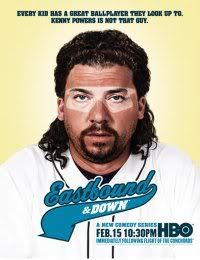
I was hoping that HBO would be smart enough to bring this growing-number-of-fans' favorite back sooner than later. Glad they've proven me right. Easily the funniest show the network has aired in, I don't know, forever. And that's including my dude Tim from The Life & Times of Tim. HBO should just cancel that shell-of-its-former-self Entourage altogether and go all out with Kenny Powers. Shit, he has Stevie already, that's all the entourage that HBO needs, anyway.
We better get some more Ashley Schaeffer, too:
News spotted over at: /Film
At least I just came across this splendid news:

HBO has officially confirmed that its original comedy series Eastbound and Down-—a /Film fave—-has been renewed for a second season. Better yet, given the fast ascent up the comedy ranks of the show’s masterminds, Danny McBride, Jody Hill, and Ben Best, one may have expected another six-episode season further down the pipeline. Instead, the next season begins filming later this year and will air in 2010. Woo. When we were on the set last year, co-director David Gordon Green revealed that a follow-up pitch was being entertained that centered on McBride’s profane bulletproof tiger Kenny Powers shipping off to South America to quasi-fulfill his baseball career. However, the idea seemed to be news to much of the cast, and given how well received the ensemble performances of Andy Daly, Katy Mixon, John Hawkes, and Steve “Ass Blood” Little, I wouldn’t bet on it.
I was hoping that HBO would be smart enough to bring this growing-number-of-fans' favorite back sooner than later. Glad they've proven me right. Easily the funniest show the network has aired in, I don't know, forever. And that's including my dude Tim from The Life & Times of Tim. HBO should just cancel that shell-of-its-former-self Entourage altogether and go all out with Kenny Powers. Shit, he has Stevie already, that's all the entourage that HBO needs, anyway.
We better get some more Ashley Schaeffer, too:
News spotted over at: /Film
Thursday, April 2, 2009
Maximum Tension
It takes something special for a film to literally get better with each viewing. That's exactly how I feel about Larry Clark's Bully (2001), a "based on real events" study of Florida youth wasted, polluted, and turned homicidal that maintains such a hypnotic hold from start to finish that I don't feel iffy in calling it "great." It's not for everybody, depicting its teenage characters in such a disgusting light that there's hardly a redeeming quality to leave with. Aside from some pretty dynamic, fearless acting and a plateful of energetic, trippy visual and audible style from Clark (who also directed Kids, another film of this topical ilk).
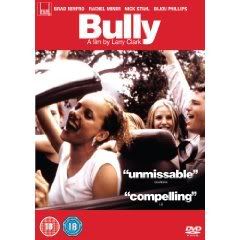
Bully just finished on basic cable a few moments ago, and of course I watched from end to end. I wrote about Bully on this here blog in the past, but this time I'm in a different space. I've decided that the film's climactic setpiece is officially one of the most intense, visceral, pulse-kicking scenes I've ever witnessed, one that (like the movie itself as a whole, like I said at the gate-opening) somehow manages to elevate in wonderment every time I see the thing.
Bit of plot round-up first, in case you have no idea what Bully is about---Marty (played by the late Brad Renfro) is best friends with Bobby (Nick Stahl), and Bobby is the epitome of scumbag. Out of his own hidden insecurity, he treats Marty like pure shit, basically turning Marty's life into a breathing nightmare. As Bobby continues to emotionally terrorize everybody around Marty, including his new spaced-out girlfriend and her stoner, deadbeat friends, they all decide to kill Bobby. Enough is enough. They hire a pseudo-"gangster/hitman" and then drive out to a far-off swamp, and then this happens.
Here's that unbelievably tense scene (if you don't feel like spoiling Bully, then don't watch, but I still suggest you do either way; it's just that crazy):
That bizarre, dizzying music that amplifies over the progression. The blurry shots, back to the shaky-cam nervousness. All of it, equals that "Wow" factor.
In the immortal words of Happy Gilmore: "Now you're gonna get it, Bobby!"

Bully just finished on basic cable a few moments ago, and of course I watched from end to end. I wrote about Bully on this here blog in the past, but this time I'm in a different space. I've decided that the film's climactic setpiece is officially one of the most intense, visceral, pulse-kicking scenes I've ever witnessed, one that (like the movie itself as a whole, like I said at the gate-opening) somehow manages to elevate in wonderment every time I see the thing.
Bit of plot round-up first, in case you have no idea what Bully is about---Marty (played by the late Brad Renfro) is best friends with Bobby (Nick Stahl), and Bobby is the epitome of scumbag. Out of his own hidden insecurity, he treats Marty like pure shit, basically turning Marty's life into a breathing nightmare. As Bobby continues to emotionally terrorize everybody around Marty, including his new spaced-out girlfriend and her stoner, deadbeat friends, they all decide to kill Bobby. Enough is enough. They hire a pseudo-"gangster/hitman" and then drive out to a far-off swamp, and then this happens.
Here's that unbelievably tense scene (if you don't feel like spoiling Bully, then don't watch, but I still suggest you do either way; it's just that crazy):
That bizarre, dizzying music that amplifies over the progression. The blurry shots, back to the shaky-cam nervousness. All of it, equals that "Wow" factor.
In the immortal words of Happy Gilmore: "Now you're gonna get it, Bobby!"
Monday, March 30, 2009
(Lack of) Food for Thought

Pride may not be the real issue here, but there's a certain amount of stock I hold dearly within my fortitude to handle films that "go there." That leave no image of brutality unseen, drop the gauntlet of good taste down fast in order to leave it shattered on the sticky cineplex floor. My stomach is deep, full of room for such harsh visions. So whenever a movie sneak attacks me and leaves me feeling queasy, I have no choice but to stand up and salute. Wave the white flag in the filmmakers' direction. The only time I can recall actually closing my eyes during a scene was when I first saw Inside at Lincoln Center, specifically the infamous-in-these-parts scissors scene at the end. One eye was half open, the other's lid pressed firmly atop the socket, unable to look away. It was a truly harrowing experience.

Steve McQueen
Having just watched Steve McQueen's unbelievably raw Hunger at the IFC Center, I can now shamelessly say that a movie has left me feeling nauseous like I've never felt before, regardless of the setting or my physical/health state. One sequence in particular had this effect, a single take tour-de-force that places the viewer in the midst of some of the fiercest, most inhuman police brutality imaginable. In a TKTK prison in Northern Ireland, back in 1981 (Hunger is based on true events), the British government has imprisoned dozens of Irish "political terrorists" who refuse to obey the Brits' law. The prisoners are on a "no wash" strike, meaning they're all filthy by choice, the walls of their cells caked in hardened, smeared feces. In an effort to enforce their methods with blunt precision, a slew of cops in full armored suits line in a hallway, shields before them and nightsticks in hand. In a bit of ritualistic pounding, they all begin to beat their sticks on the shields. Then, each prisoner is yanked out of their cells, naked, and thrown through the gauntlet of cops, who all take violent swings with their nightsticks as the nude inmate crawls through for survival. Once at the end of the hell-way, each beaten man is violated anally and then left to rot on the floor.

McQueen shoots the scene in one long take, and it's pretty breathtaking. Until this point, Hunger is a rather subdued, controlled film, moving along patiently with little dialogue and plenty of drawn-out in-cell scenes. That's why this police-imposed, one-sided riot is so unnerving. McQueen swoops the camera from prisoner to prisoner throughout the scene, erratic with his hands. Whatever feeling of ease the viewer has had is immediately swallowed up and spit out as if a T-Rex is doing the oral flinging.
I felt the bottom of my throat give out a bit, and the scene wasn't even halfway over. Crazy.
For a first time filmmaker, McQueen achives nothing short of a gargantuan effort with Hunger. Scene after scene, the film is an exhibition of the man's visual gifts. Directly after that aforementioned prison beatdown setpiece, we follow one of the prison's high-ranking officers as he visits his sick mother in a nursing home. It's obviously an attempt to make the viewer sympathize a bit with the mongrels in blue. But then, like the robber who sucker-punches McLovin in Superbad, we're hit with a point-blank execution that I totally didn't see coming. At all. As a result, McQueen had me second guessing his every subsequent move. I was basically the guy's puppet, a plaything that he could trick and blindside however he pleased cinematically.
Fortunately for my senses, the remainder of the film is devoid of random violence. Well, actually, "fortunately" isn't the right word. While never less than stunning, the final act of Hunger is tough to watch without cringing a tad. At this point, our lead, Bobby Sands (played amazingly by Michael Fassbender, who impressed in Eden Lake and will surely impress in Quentin Tarantino's Inglourious Basterds; the guy is one to watch), has decided to kick his freedom-fighting into high gear by organizing a hunger strike within the prison, which 74 other inmates agree to. Now, I'm not sure if what we see from here on out is actually Fassbender, or just some incredibly realistic trickery by McQueen and his cohorts. But if you thought Christian Bale looked sickly in The Machinist, you haven't seen a damn thing yet. Fassbender turns into a breathing skeleton, rib-cage sticking out, every other bone excruciatingly visible. Sands lasted 66 days before succumbing to the emaciation, and if dying of hunger is even half as unbearable and painful as seen on Fassbender here, I'm taking my ass to Outback for lunch tomorrow just to make sure I'm well fed. Damn, does it look like almighty hell.

Michael Fassbender, pre-hunger pains
It's films like Hunger that remind me why I'm so infatuated with cinema, which makes it all the more shameful that it's only playing in one theater in this area. Going largely unknown, looked over, outside of film buffs and critics. Something this delicately made, richly acted, and historically significant deserves a chance, so whenever the DVD streets I highly recommend giving it a go. You might toss up your cheeseburger while watching, but there's no doubt in my mind that you'll finish the film feeling floored. Pedal to the emotional metal.
Put it this way: any film that can turn an overlong scene where a guy mops an entire prison hallway into an intensely hypnotic event isn't fucking around.
Wednesday, March 25, 2009
"They took myyyy thuummbb!"
Eric Roberts, in 1984's The Pope of Greenwich Village. What a wild yet focused, spastic but controlled performance. You've been cast alongside an in-his-initial-prime Mickey Rourke, and you own nearly every scene you share with the Mick. No easy feat.
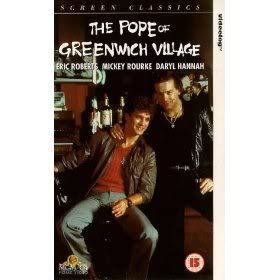
As the live-wire, hot-headed Paulie, cousin of somewhat cooler-acting Charlie (Rourke), a then-28-years-old Roberts churns out a a character who can't control his reckless urges even when he's fully aware of just how badly he's fucking things up for both he and Charlie. The Pope of Greenwich Village is an under-hailed entry into the "down and out guys concocting an illegal get-rich scheme that goes to shit" subgenre of crime flicks, not unlike Dead Presidents or Stanley Kubrick's The Killing. What sets this one apart, though, is a natural comedic flair throughout, largely served up by Roberts. Which is driven home in the surprisingly "happy" final scene. His "Paulie" is the standard problem-starter alongside Rourke's straight man, and their scenes together exude "cool."
At this year's Independent Spirit Awards, Rourke began his acceptance speech by shouting Roberts out and challenging all talented, risky filmmakers to give Roberts a shot similar to the one Darren Aronofksy gave Rourke with The Wrestler. I second that notion, now having rewatched The Pope in Greenwich Village. The electric talent seen here is no doubt still within the guy; just watch The Dark Knight for the tenth time and pay close attention to his understated menace as crime boss "Maroni." Dude hasn't gone South skill-wise.
How about somebody out there scripts up a flick that follows the uphill climb of a former gangster trying to do right by his motherless teenage daughter. That's a role today's Roberts could blow a hole through, no question.
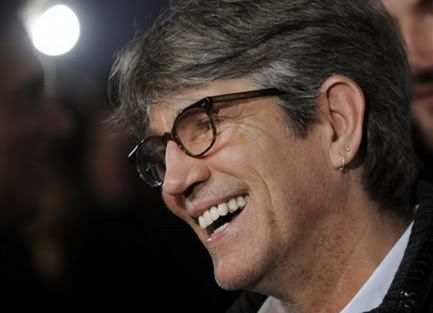
How about it? 2010, the year that Eric Roberts makes his triumphant comeback. Clock starts now.

As the live-wire, hot-headed Paulie, cousin of somewhat cooler-acting Charlie (Rourke), a then-28-years-old Roberts churns out a a character who can't control his reckless urges even when he's fully aware of just how badly he's fucking things up for both he and Charlie. The Pope of Greenwich Village is an under-hailed entry into the "down and out guys concocting an illegal get-rich scheme that goes to shit" subgenre of crime flicks, not unlike Dead Presidents or Stanley Kubrick's The Killing. What sets this one apart, though, is a natural comedic flair throughout, largely served up by Roberts. Which is driven home in the surprisingly "happy" final scene. His "Paulie" is the standard problem-starter alongside Rourke's straight man, and their scenes together exude "cool."
At this year's Independent Spirit Awards, Rourke began his acceptance speech by shouting Roberts out and challenging all talented, risky filmmakers to give Roberts a shot similar to the one Darren Aronofksy gave Rourke with The Wrestler. I second that notion, now having rewatched The Pope in Greenwich Village. The electric talent seen here is no doubt still within the guy; just watch The Dark Knight for the tenth time and pay close attention to his understated menace as crime boss "Maroni." Dude hasn't gone South skill-wise.
How about somebody out there scripts up a flick that follows the uphill climb of a former gangster trying to do right by his motherless teenage daughter. That's a role today's Roberts could blow a hole through, no question.

How about it? 2010, the year that Eric Roberts makes his triumphant comeback. Clock starts now.
Monday, March 9, 2009
Let's call this Last House on the Left week, shall we?
The more I read via the 'Net and horror writers' Twitter updates, the more excited I'm getting about this Last House on the Left remake. Seeing it tomorrow night, wonderfully, and the anticipation is tipping the metaphorical scales. How can it go wrong?
Positive 1) The cast is full of not-so-big actors/actresses that I'm fond of, namely Riki Lindhome, a strangely-erotic-looking gal with an long yet striking face, model-like bod, and compelling disposition that I'm totally fascinated by, and Aaron Paul, an modern-day Alex Winter lookalike who is winning me over courtesy of AMC's pretty special show Breaking Bad.
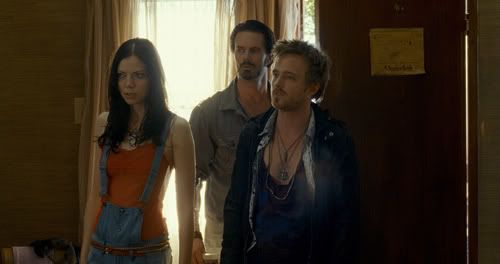
Riki Lindhome, Garrett Dillahunt, Aaron Paul
Positive 2) The last time Wes Craven and company hired a talented new foreign director to update one of his early works, the result was Alexandre Aja's kick-ass The Hills Have Eyes; French guy Aja's High Tension (the flick that inspired Craven to hire him) wowed me in similar ways as Dennis Iliadis' Hardcore, so I'm optimistic that Iliadis has some tricks up his Greek sleeves with this Last House (Craven's 1972 debut).
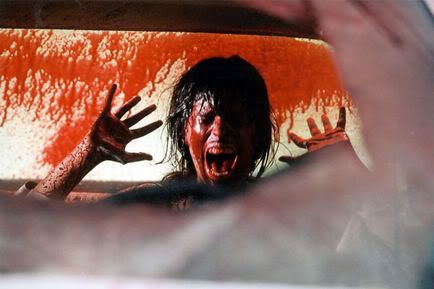
One of the several money scenes in Alexandre Aja's High Tension
Positive 3) Word is, proven by the trailer, that this take is pure 100% bleakness, which is a great call, since the original Last House is irritatingly 75% goofy, lighthearted bore and 25% stellar visceral gutpunch.
As a sort of self-imposed homework assignment/study session, I'm about to start my Last House on the Left '72 DVD, to refresh the memory and draw a definitive "remake: superior or not?" conclusion come tomorrow night. I fear that many of you who check this humble little site out have never seen Wes Craven's original, though, or even heard of it until now. In light of such questionable ignorance, here's a couple of choice scenes, totally posted out of complete context. Just know that two girls are killed and raped in the woods by four sadistic criminals, who, stranded without a working car, then seek refuge in the home of the one now-mutilated girl's parents, and the parents, upon learning the truth, go apeshit.
If you plan on someday watching Craven's original in its entirety at some point, then don't check these. Otherwise, give them a gander. Consider Barone's World your one-stop educational shop on current remakes.
Now enjoy (or cringe) (or feel indifferent):
Positive 1) The cast is full of not-so-big actors/actresses that I'm fond of, namely Riki Lindhome, a strangely-erotic-looking gal with an long yet striking face, model-like bod, and compelling disposition that I'm totally fascinated by, and Aaron Paul, an modern-day Alex Winter lookalike who is winning me over courtesy of AMC's pretty special show Breaking Bad.

Riki Lindhome, Garrett Dillahunt, Aaron Paul
Positive 2) The last time Wes Craven and company hired a talented new foreign director to update one of his early works, the result was Alexandre Aja's kick-ass The Hills Have Eyes; French guy Aja's High Tension (the flick that inspired Craven to hire him) wowed me in similar ways as Dennis Iliadis' Hardcore, so I'm optimistic that Iliadis has some tricks up his Greek sleeves with this Last House (Craven's 1972 debut).

One of the several money scenes in Alexandre Aja's High Tension
Positive 3) Word is, proven by the trailer, that this take is pure 100% bleakness, which is a great call, since the original Last House is irritatingly 75% goofy, lighthearted bore and 25% stellar visceral gutpunch.
As a sort of self-imposed homework assignment/study session, I'm about to start my Last House on the Left '72 DVD, to refresh the memory and draw a definitive "remake: superior or not?" conclusion come tomorrow night. I fear that many of you who check this humble little site out have never seen Wes Craven's original, though, or even heard of it until now. In light of such questionable ignorance, here's a couple of choice scenes, totally posted out of complete context. Just know that two girls are killed and raped in the woods by four sadistic criminals, who, stranded without a working car, then seek refuge in the home of the one now-mutilated girl's parents, and the parents, upon learning the truth, go apeshit.
If you plan on someday watching Craven's original in its entirety at some point, then don't check these. Otherwise, give them a gander. Consider Barone's World your one-stop educational shop on current remakes.
Now enjoy (or cringe) (or feel indifferent):
Wednesday, February 25, 2009
Netflix Fix -- Inferno (1980)

You know a film is pretty awesome when even after your third time seeing it you still can't figure out what in the hell is exactly going on. Well, at least I know it's awe-to-the-you-know-what. Inferno, a sequel of sorts to Dario Argento's could-be-a-horror-masterpiece Suspiria, falls splat in the center of that category. As far as I can tell, and realize that this is the same explanation I mustered after my first time seeing it years back, the second Mother, "Mater Tenebrarum," doesn't want any of these too-curious New Yorkers to discover her, and she's hellbent on slaughtering them in some truly stunning ways.
Such as this, which happens early on and too-quickly concludes the screen time of one Eleonora Giorgi, who is dynamite to look at and actually gives this character a nice weight of anxiety (sorry about the Italian language....it's all I could scrounge up). Something tells me that Brian Bertino, the man behind last year's great The Strangers, was influenced by this scene; it's all in the eerie, off-putting record skips:
Beware the Following Geek-Out (Any Ladies Reading This....Please Don't Hold This Knowledge Against Me): Oh, yeah, "There's more than one Mother to warrant calling this one the second?" the unseasoned Argento/horror head may ask. Basically, Argento has arched three of his flicks around a mythology known as The Three Mothers, three witches living in a trio of locations: Mater Suspiriorium, "The Mother of Sighs" and formally named Helen Markos (seen decrepit in 1977's Suspiria), lives in Germany; Mater Lachrimarum (who shows up in last year's so-bad-it's-kinda-good Mother of Tears and is a true hottie, evil or not) lives in Rome; and this film's Mater Tenebrarum, "The Mother of Shadows," lives in New York. Yes, I'm a huge nerd for knowing this, but any self-respecting horror lover should. Wanna fight about it?
The thing is, this was all so much easier to follow in Suspiria, the best of the trilogy by far stretches. The mythology wasn't airtight in that one either, but at least I only scratch my head for a few seconds; here, in Inferno, however, whatever fingernails I have left from not biting them off completely end up dull and edgeless as a result of the incoherent narrative. If there's one thing I never turn on an Argento film for, though, it's a storyline that makes total sense, since his earlier films all looked absolutely magnificent and not many filmmakers can stage a murder scene as fluidly and eye-poppingly as my boy Dario. In some ways, I hold Inferno up in the same league as David Lynch's films---the type of movie-watching that never even-partially exposes its true thread but never lessens its vice grip on my attention.
Oddly, my favorite moment in Inferno is one where the character manages to survive a run-in with the Mother. The film's opening stretch follows the poet sister as she first investigates the cellar of the apartment building, believing in this Three Mothers story and wanting to see for herself just who hides out "beneath the soles of her shoes." Turns out, the cellar is flooded, and she, being a dumbass, drops her keys into a watery hole in the floor. Naturally, she jumps in to retrieve the keys, and the underwater sequence that follows is pitch-perfect in its hallucinatory creepy.

Yet, so many inquiries remain: Why are there so many damn cats running around this apartment building, and why is that old dude on the crutches drowning a sack full of the felines? Why isn't there at least one sympathetic, even-partially-developed character for me to root for? How fake is the crutches-guy's "accidental" fall into the water? Whoops, my ass cheek. Did Argento write this script by simply designin the many elaborate death moments and then just add a few connecting scenes of dialogue and boredom while he was on the can? And finally, do we really understand why Mater Tenebrarum is even bothering with such a lame crew of intruders?
How does Mater Tenebrarum magically travel to Rome in a matter of minutes to kill the lifeless, cardboard male protagonist's sexy-poet sister? Fuck if I know. You could leave it at "She's a f'n supernatural demon witch, so she can do whatever her cold heart pleases," but still, I would've appreciated even an attempt to explain. Nevermind, ultimately, because what results from this inexplicable location jumping is this murder-set-piece, which is stellar:
Oh, and I can't let this one slip by: why does crutches-guy inform himself that "Rats are eating me alive!" when nobody is around and, yes, rats are eating him alive. Meaningless, an answer is, because the scene as a whole rocks harder than Pantera, especially when the random deli butcher runs over and drives a meat-clever into dude's neck.
So many questions, so little reason to truthfully want, or need, answers. Inferno is the most nonsensical script that Dario Argento ever scribed. Zero sense is made. The skeletal costume worn by Mater Tenebrarum looks like some $50Halloween get-up you could buy at Ken's Magic Shop., and the ending confrontation between the Mother and our "hero" very anti-climactic. If not for the plethora of gorgeous-looking, slickly-paced murders, the film would be laughably terrible. Pure Mystery Science Theater 3000 fodder. It could be the ultimate "film that's just an excuse to show repeated whoa moments" experience, but when would that ever be a bad thing?
And now.....flying cats, anyone?
Monday, February 23, 2009
Kenny Powers is more awesome than you.
Why do I get the uncomfortable feeling that you're not watching this show, when you most certainly should be?
Family Guy aside, this is easily the funniest shit on the tube. As I suspected it would be. Only four episodes left, just enough time to sign up.
Do the damn thing.
That is all. Goodnight.
Family Guy aside, this is easily the funniest shit on the tube. As I suspected it would be. Only four episodes left, just enough time to sign up.
Do the damn thing.
That is all. Goodnight.
Saturday, February 21, 2009
"The award for Best Canine Actor in a Supporting Role goes to...."
The Academy totally missed this one back in 1982.
On my catch-up quest to watch all of Dario Argento's films, I've just come across one of the best canine actors that cinema has ever produced. In the Italian horror icon's Tenebre (1982), there's this totally badass sequence where this dog-shit-crazy Doberman randomly chases after one of the doomed female characters, and this bitch (assuming its a female dog, for the word-usage-here sake) stops at nathan. What makes the scene so wonderful is that Tenebre has nothing to do with killer dogs, at all. It's about an author on a book-tour in Rome whose latest hit murder mystery novel has inspired some psycho to kill a slew of Italian girls in ways written in the book, also titled Tenebre.
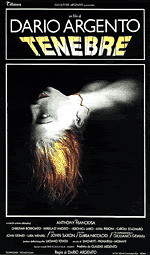
Tenebre, this actual movie, is a hands-down winner. Not as stellar as Argento's Suspiria, and mere inches behind Deep Red in coolness, but still victorious. The way the movie is paced, you know when a girl is going to be hacked and slashed instantly, because Argento lingers on an otherwise-insignificant female character long enough to ensure she'll be dead within ten minutes. Being that I sign on to Argento films to watch beautiful people die even-more-beautiful, exquisitely-staged deaths, this is a good thing. Gets right down to business. As it should be.
So this dog in Tenebre serves absolutely no purpose other than provide some extra tension, and that it sure does. The first victim is bothered and chased down by a dirty hobo in a similar fashion to how this dog gives this girl the bad-business, and that's the only aspect of this sequence that rang somewhat purposeful, to possibly beat home the idea of "this girl is totally fucked, so don't worry if she escapes this first assailant." Indeed.
It also helps in bulk that the dog actor here is dynamite. Relentless, athletic, menacing. You'd think this chick was packing some Snausages in her pants pockets.
Enjoy:
And after surviving all of that, she ends up catching a couple axe-swings into her gut five minutes later. Should've just let the dog use her for rawhide instead.
On my catch-up quest to watch all of Dario Argento's films, I've just come across one of the best canine actors that cinema has ever produced. In the Italian horror icon's Tenebre (1982), there's this totally badass sequence where this dog-shit-crazy Doberman randomly chases after one of the doomed female characters, and this bitch (assuming its a female dog, for the word-usage-here sake) stops at nathan. What makes the scene so wonderful is that Tenebre has nothing to do with killer dogs, at all. It's about an author on a book-tour in Rome whose latest hit murder mystery novel has inspired some psycho to kill a slew of Italian girls in ways written in the book, also titled Tenebre.

Tenebre, this actual movie, is a hands-down winner. Not as stellar as Argento's Suspiria, and mere inches behind Deep Red in coolness, but still victorious. The way the movie is paced, you know when a girl is going to be hacked and slashed instantly, because Argento lingers on an otherwise-insignificant female character long enough to ensure she'll be dead within ten minutes. Being that I sign on to Argento films to watch beautiful people die even-more-beautiful, exquisitely-staged deaths, this is a good thing. Gets right down to business. As it should be.
So this dog in Tenebre serves absolutely no purpose other than provide some extra tension, and that it sure does. The first victim is bothered and chased down by a dirty hobo in a similar fashion to how this dog gives this girl the bad-business, and that's the only aspect of this sequence that rang somewhat purposeful, to possibly beat home the idea of "this girl is totally fucked, so don't worry if she escapes this first assailant." Indeed.
It also helps in bulk that the dog actor here is dynamite. Relentless, athletic, menacing. You'd think this chick was packing some Snausages in her pants pockets.
Enjoy:
And after surviving all of that, she ends up catching a couple axe-swings into her gut five minutes later. Should've just let the dog use her for rawhide instead.
Tuesday, February 10, 2009
"Blasphemy" charges rethought.....1985's The Twilight Zone
I guess I've been a bit too "loyal." Pledging allegiance to a fault.
It's no secret (if you know anything about me) that Rod Serling's The Twilight Zone has been, and still is, a benchmark in my life, in terms of inspiration and enjoyment. Seriously, I can watch any given episode, even lesser ones such as "The Mighty Casey," repeatedly; it's all in the storytelling employed by Serling, Richard Matheson, and Charles Beaumont. Whether otherwordly or grounded in the everyday, the T-Zone stories meshed suspense, fantasy, and underlying social messages so well, so fluidly, that you could just rerun the original eps today and it'd still blow every other television show out of the goddamn boob-tube. No bullshit.
Considering this intense adoration I have for the original show, it should be understandable that I've long been leery of the 1985 reboot, same-named The Twilight Zone.
I'd heard mostly negative chatter, which sounded about right to me---Twilight Zone without Serling seems worse than McDonalds without their glorious french fries (sorry, I submitted to the temptation recently, and it was practically an orgy of the mouth). And then I checked out some clips of 1985-Zone episodes on Youtube, and the ish seemed like a Tales from the Darkside ripoff, meaning, a knock-job of an already-mediocre anthology series. Gone were/still-are the topical awareness of the original series; present were/still-are basic "shocks" and standard horror yarns, stripped of all-important soul and left to sustain as hollow grounds. Which wouldn't be a big deal, truthfully, if it had just called itself anything other than The Twilight Zone.
Plus, the Grateful Dead-orchestrated theme music sucks, as does the opening title sequence---both key elements of the original show. Why keep the Twilight Zone name? I'd wonder to myself, a bit peeved.
Thanks to the Chiller channel, however, I've been able to DVR several episodes now, and I must admit---the 1985 version isn't a total washout. Of course, the storytellers involved couldn't even reload Serling's typewriter, but who can, really? Taken as nothing more than largely-cheesy entertainment, it has its memorable moments. More crappy episodes than stellar ones, but it's at least interesting to see the early work of actors the likes of Bruce Willis and Helen Mirren, as well as directors such as Wes Craven and William Friedkin. I can't exactly call myself a "fan" of the relaunch, though; just somebody who'll now gladly watch the episodes when they come up on Chiller, and then quickly dispose of them off of my DVR memory bank.
All that being disclosed, I now want to post one of the better entries from the 1985 spin, director William Friedkin's (The Exorcist, The French Connection, and recently Bug)intense, great-looking "Nightcrawlers." Unlike nearly every other 1985-Zone story, this one actually has shreds of Rod Serling's original M.O.---namely the "Vietnam war veteran who can't shake the horrors of the war" angle. Some of the best Serling Zone tales dealt with war vets (i.e., the Nazi deathcamp-of-ghosts winner "Death's Head Revisited"), and something tells me that the man himself would've given his prestigiuous thumbs-up to "Nightcrawlers." Even though it's certainly more mean-spirited and violent than traditional Zones.
Check it out if you're intrigued at all, it's a two-parter, but only 20 minutes total; the final five minutes are bad-to-the-ass (No Milk? For the record, I'm a Milk fan, I just didn't feel like saying tired-old "No Brokeback"):
You know why even this successful episode doesn't feel like it's The Twilight Zone? No introduction/conclusion narrations. Nobody could do them like Sir Serling, so I guess they were better off cutting their losses, eh?
It's no secret (if you know anything about me) that Rod Serling's The Twilight Zone has been, and still is, a benchmark in my life, in terms of inspiration and enjoyment. Seriously, I can watch any given episode, even lesser ones such as "The Mighty Casey," repeatedly; it's all in the storytelling employed by Serling, Richard Matheson, and Charles Beaumont. Whether otherwordly or grounded in the everyday, the T-Zone stories meshed suspense, fantasy, and underlying social messages so well, so fluidly, that you could just rerun the original eps today and it'd still blow every other television show out of the goddamn boob-tube. No bullshit.
Considering this intense adoration I have for the original show, it should be understandable that I've long been leery of the 1985 reboot, same-named The Twilight Zone.

I'd heard mostly negative chatter, which sounded about right to me---Twilight Zone without Serling seems worse than McDonalds without their glorious french fries (sorry, I submitted to the temptation recently, and it was practically an orgy of the mouth). And then I checked out some clips of 1985-Zone episodes on Youtube, and the ish seemed like a Tales from the Darkside ripoff, meaning, a knock-job of an already-mediocre anthology series. Gone were/still-are the topical awareness of the original series; present were/still-are basic "shocks" and standard horror yarns, stripped of all-important soul and left to sustain as hollow grounds. Which wouldn't be a big deal, truthfully, if it had just called itself anything other than The Twilight Zone.
Plus, the Grateful Dead-orchestrated theme music sucks, as does the opening title sequence---both key elements of the original show. Why keep the Twilight Zone name? I'd wonder to myself, a bit peeved.
Thanks to the Chiller channel, however, I've been able to DVR several episodes now, and I must admit---the 1985 version isn't a total washout. Of course, the storytellers involved couldn't even reload Serling's typewriter, but who can, really? Taken as nothing more than largely-cheesy entertainment, it has its memorable moments. More crappy episodes than stellar ones, but it's at least interesting to see the early work of actors the likes of Bruce Willis and Helen Mirren, as well as directors such as Wes Craven and William Friedkin. I can't exactly call myself a "fan" of the relaunch, though; just somebody who'll now gladly watch the episodes when they come up on Chiller, and then quickly dispose of them off of my DVR memory bank.
All that being disclosed, I now want to post one of the better entries from the 1985 spin, director William Friedkin's (The Exorcist, The French Connection, and recently Bug)intense, great-looking "Nightcrawlers." Unlike nearly every other 1985-Zone story, this one actually has shreds of Rod Serling's original M.O.---namely the "Vietnam war veteran who can't shake the horrors of the war" angle. Some of the best Serling Zone tales dealt with war vets (i.e., the Nazi deathcamp-of-ghosts winner "Death's Head Revisited"), and something tells me that the man himself would've given his prestigiuous thumbs-up to "Nightcrawlers." Even though it's certainly more mean-spirited and violent than traditional Zones.
Check it out if you're intrigued at all, it's a two-parter, but only 20 minutes total; the final five minutes are bad-to-the-ass (No Milk? For the record, I'm a Milk fan, I just didn't feel like saying tired-old "No Brokeback"):
You know why even this successful episode doesn't feel like it's The Twilight Zone? No introduction/conclusion narrations. Nobody could do them like Sir Serling, so I guess they were better off cutting their losses, eh?
Sunday, February 8, 2009
Netflix Fix -- Assault on Precinct 13 (1976)
No, this isn't the one with Laurence Fishburne and Ja Rule. It's the far-superior original, from the brain of the great John Carpenter.
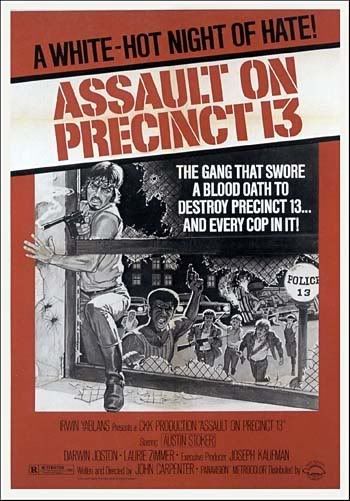
Loving this poster.
I'm opting to just post an awesome clip this time, rather to write an endless stream-of-thought about the flick. It must be said, though, that this is one I've waited far too long to check out, and it now completes my "John Carpenter catalog" domination.
And it's a very-enjoyably barbaric, chest-thumping, fearless action shoot-'em-up-like-heroin show from an era of synth-heavy soundtracks and glowing-red blood spurts. The best of times, in other words. Nobody (for my $$$) has ever used unconventional music in films as amazingly as Carpenter has. This Assault on Precinct 13 clip backs me up:
[What makes this scene so effective is the way that Carpenter sets this little girl character up. The couple of scenes she's in prior to this one feel totally random and unnecessary for the plot's sake, talking with her father in a car about pointless shit. Seasoned viewers should be able to sense that something bad is in her future, however, despite her mundane presence]
Goes to show....just be happy with your basic vanilla cone, kids.
Full Assault on Precinct 13 trailer:

Loving this poster.
I'm opting to just post an awesome clip this time, rather to write an endless stream-of-thought about the flick. It must be said, though, that this is one I've waited far too long to check out, and it now completes my "John Carpenter catalog" domination.
And it's a very-enjoyably barbaric, chest-thumping, fearless action shoot-'em-up-like-heroin show from an era of synth-heavy soundtracks and glowing-red blood spurts. The best of times, in other words. Nobody (for my $$$) has ever used unconventional music in films as amazingly as Carpenter has. This Assault on Precinct 13 clip backs me up:
[What makes this scene so effective is the way that Carpenter sets this little girl character up. The couple of scenes she's in prior to this one feel totally random and unnecessary for the plot's sake, talking with her father in a car about pointless shit. Seasoned viewers should be able to sense that something bad is in her future, however, despite her mundane presence]
Goes to show....just be happy with your basic vanilla cone, kids.
Full Assault on Precinct 13 trailer:
Sunday, February 1, 2009
Apocalypse Now: My Own Redux
Cinemax, in a wonderful bit of programming, is airing Apocalypse Now Redux, the extended cut of Francis Ford Coppola's flawless 1979 Vietnam War epic. It's a top three film of all time, entering the top two on any given day, flip-flopping with A Clockwork Orange for the reigning-champ slot. All three-and-a-half hours, impossible to turn off once its begun, impressive in infinite ways during every single frame.

The first time I saw Apocalypse Now was in its "redux" form. Super late to the game, and I'm somewhat ashamed to say that the only reason I saw it at that time (early into the Fall semester of my sophomore year at college, late-2001) was because the film class I was taking required me to do so. Professor Brady (a great man, who just so happened to be a large, dead ringer for Col. Sanders...."Something must be wrong with his madula oblangada!"), aware that Redux was playing for a limited time in a Dolby Surround Sound theater in the heart of Times Square, made seeing Apocalypse Now Redux our weekly homework assignment.
So I went with my friend/classmate Alex on an especially-frigid October evening, the wind blowing and howling into freezing bursts of face-punishing air. We bought our tickets, filed into the theater. Noticed that we made up the theater's entire population, a cool Two In Attendance. Of course, we sat many-a-seat away from each other, completely ignorant to the head-smashing experience that was about to rear its profound head. The movie started, the sounds blaring in crisp-force that would've made an IMAX screen jealous. And as the film progressed, I found myself lost in a seriously-warped mindstate. Obviously, I'm way too much of a spring chicken to have any clue as to what being in Vietnam felt like, but it's nearly impossible to not feel a certain "I'm actually there" sensation while watching Apocalypse Now, especially while seated in a dark, lonely cinema.
Coppola should forever be held atop a shrine for the feats he accomplished. Visually, every scene in the film feels brutally authentic, honest. Acting-wise, there's not a one even-teetering-on-mediocre performance in the lot, from the topliners (Martin Sheen, Marlon Brando, Robert Duvall, Laurence Fishburne) down to the nameless soldier who when asked by Sheen's "Captain Willard," "Hey, who's in charge here?" devastatingly responds in a panic: "Ain't you!?"
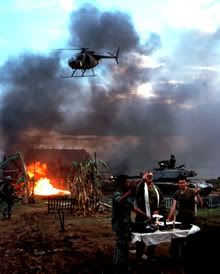
I won't delve too deeply into the technical astonishments of the film here, mainly because the film holds a much more personal meaning to me. There couldn't have been a better time for me to have seen Apocalypse Now for the first time than that nippy October night back in '01. Take a second to think back to what had just gone down at that time: 9/11. Being a New York City college student, the mood of fear, paranoia, an uncertainty sparked by those Twin Towers attacks held us all in a vice-grip for months. The strongest of fears I felt at that time was the potential "Army draft" that was ready to be reinstated. I love this country, sure, but fuck no; no way I wanted to go fight in any war, let alone one in enigmatic Iraq. How savage is the fighting over there? What good would my dying in combat really do over there? Am I strong enough to withstand the mental tug-of-wars and destruction-in-daily-plain-view?
Endless questions, zero answers. But then, I saw Apocalypse Now, right at the peak of my own nervous self-inquisitions. I saw what could be myself in teenage "Mr. Clean" (played by a young Laurence Fishburne, in his first major film role I believe), specifically during his death scene; as he's listening to a recording made by his mother back in the Bronx, updating him on all of his family's doings and declaring their undying love and support for him, ready for him to come back home after having "avoided those bullets." The boat is lit up with gunfire, and Clean is hit, dying instantly. We see his bloodied corpse sprawled out in the middle of the boat, as the recording keeps playing. I imagined my own mom's voice, telling me how Zoey was getting so big, and that my cousins ask about me on a ritualistic basis: "When is Matt coming back home?" And how she, while thinking about me and looking at pictures of yours truly alongise my pops, would have no clue that I was in fact lying dead inside some tank in the Iraqi slums.
In a movie overflowing with haunting images and surreal realities of a time past, Mr. Clean's death is the one that has since stuck in my head. I often play Clean's final moments back within my thoughts, despite not having seen Apocalypse Now in a couple of years (until today, that is; I own it on DVD, but haven't revisited in quite some time). It's a mental stain, but not a "stain" in that "fuck, I just spilled fruit punch on my sofa, and now it'll never come off" way; it's a "stain" in that the scene is permanent while being totally welcome, acknowledged as something important.
By the time the already-cerebral masterpiece reaches the dark jungles of Cambodia where once-celebrated-Army-titan-and-now-insane-war-criminal Col. Kurtz (played with controlled lunacy by the great Marlon Brando), I'm so lost in a trance that the sights of Dennis Hopper's drug-riddled, "Renfield"-ish madman and the real-as-sin animal slaughter hit like illegal punches after the bell has rung. The film is a reinterpretation of the classic story "Hearts of Darkness," a tale about a sane man who loses his marbles while amidst a primitive, savage society, realizing that his more-advanced ways could be seen as almighty, and proceeds to act as a sort of God for the primitives. That's exactly what has happened to Col. Kurtz in Apocalypse Now, and it's scary to think just how tasty sudden-power can be. So delish that it could shatter a man's sanity, make him forget about his loved ones and any code of ethics he once cherished.
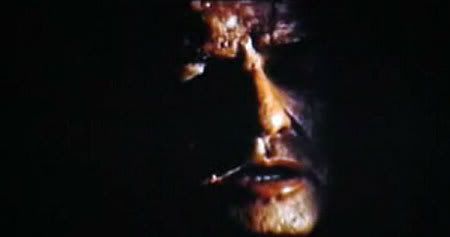
Apocalypse Now....easily the most eye-opening, mentally-lasting film I've ever had the privilege of seeing in a theater. Really, I haven't scratched the surface on the many things I take out of this film, every time I sit down with it. But regardless of my given mood, the death of wee-lad Mr. Clean is the most unavoidably tattoo-ed.
I wanted to end this with a brilliant quote from the flick, but didn't want to go with the obvious ones: "The horror....the horror" or, "I love the smell of Napalm in the morning....it smells like victory." So, I've opted for:
"You see, there are two of you: the one who kills, and the one who loves."

The first time I saw Apocalypse Now was in its "redux" form. Super late to the game, and I'm somewhat ashamed to say that the only reason I saw it at that time (early into the Fall semester of my sophomore year at college, late-2001) was because the film class I was taking required me to do so. Professor Brady (a great man, who just so happened to be a large, dead ringer for Col. Sanders...."Something must be wrong with his madula oblangada!"), aware that Redux was playing for a limited time in a Dolby Surround Sound theater in the heart of Times Square, made seeing Apocalypse Now Redux our weekly homework assignment.
So I went with my friend/classmate Alex on an especially-frigid October evening, the wind blowing and howling into freezing bursts of face-punishing air. We bought our tickets, filed into the theater. Noticed that we made up the theater's entire population, a cool Two In Attendance. Of course, we sat many-a-seat away from each other, completely ignorant to the head-smashing experience that was about to rear its profound head. The movie started, the sounds blaring in crisp-force that would've made an IMAX screen jealous. And as the film progressed, I found myself lost in a seriously-warped mindstate. Obviously, I'm way too much of a spring chicken to have any clue as to what being in Vietnam felt like, but it's nearly impossible to not feel a certain "I'm actually there" sensation while watching Apocalypse Now, especially while seated in a dark, lonely cinema.
Coppola should forever be held atop a shrine for the feats he accomplished. Visually, every scene in the film feels brutally authentic, honest. Acting-wise, there's not a one even-teetering-on-mediocre performance in the lot, from the topliners (Martin Sheen, Marlon Brando, Robert Duvall, Laurence Fishburne) down to the nameless soldier who when asked by Sheen's "Captain Willard," "Hey, who's in charge here?" devastatingly responds in a panic: "Ain't you!?"

I won't delve too deeply into the technical astonishments of the film here, mainly because the film holds a much more personal meaning to me. There couldn't have been a better time for me to have seen Apocalypse Now for the first time than that nippy October night back in '01. Take a second to think back to what had just gone down at that time: 9/11. Being a New York City college student, the mood of fear, paranoia, an uncertainty sparked by those Twin Towers attacks held us all in a vice-grip for months. The strongest of fears I felt at that time was the potential "Army draft" that was ready to be reinstated. I love this country, sure, but fuck no; no way I wanted to go fight in any war, let alone one in enigmatic Iraq. How savage is the fighting over there? What good would my dying in combat really do over there? Am I strong enough to withstand the mental tug-of-wars and destruction-in-daily-plain-view?
Endless questions, zero answers. But then, I saw Apocalypse Now, right at the peak of my own nervous self-inquisitions. I saw what could be myself in teenage "Mr. Clean" (played by a young Laurence Fishburne, in his first major film role I believe), specifically during his death scene; as he's listening to a recording made by his mother back in the Bronx, updating him on all of his family's doings and declaring their undying love and support for him, ready for him to come back home after having "avoided those bullets." The boat is lit up with gunfire, and Clean is hit, dying instantly. We see his bloodied corpse sprawled out in the middle of the boat, as the recording keeps playing. I imagined my own mom's voice, telling me how Zoey was getting so big, and that my cousins ask about me on a ritualistic basis: "When is Matt coming back home?" And how she, while thinking about me and looking at pictures of yours truly alongise my pops, would have no clue that I was in fact lying dead inside some tank in the Iraqi slums.
In a movie overflowing with haunting images and surreal realities of a time past, Mr. Clean's death is the one that has since stuck in my head. I often play Clean's final moments back within my thoughts, despite not having seen Apocalypse Now in a couple of years (until today, that is; I own it on DVD, but haven't revisited in quite some time). It's a mental stain, but not a "stain" in that "fuck, I just spilled fruit punch on my sofa, and now it'll never come off" way; it's a "stain" in that the scene is permanent while being totally welcome, acknowledged as something important.
By the time the already-cerebral masterpiece reaches the dark jungles of Cambodia where once-celebrated-Army-titan-and-now-insane-war-criminal Col. Kurtz (played with controlled lunacy by the great Marlon Brando), I'm so lost in a trance that the sights of Dennis Hopper's drug-riddled, "Renfield"-ish madman and the real-as-sin animal slaughter hit like illegal punches after the bell has rung. The film is a reinterpretation of the classic story "Hearts of Darkness," a tale about a sane man who loses his marbles while amidst a primitive, savage society, realizing that his more-advanced ways could be seen as almighty, and proceeds to act as a sort of God for the primitives. That's exactly what has happened to Col. Kurtz in Apocalypse Now, and it's scary to think just how tasty sudden-power can be. So delish that it could shatter a man's sanity, make him forget about his loved ones and any code of ethics he once cherished.

Apocalypse Now....easily the most eye-opening, mentally-lasting film I've ever had the privilege of seeing in a theater. Really, I haven't scratched the surface on the many things I take out of this film, every time I sit down with it. But regardless of my given mood, the death of wee-lad Mr. Clean is the most unavoidably tattoo-ed.
I wanted to end this with a brilliant quote from the flick, but didn't want to go with the obvious ones: "The horror....the horror" or, "I love the smell of Napalm in the morning....it smells like victory." So, I've opted for:
"You see, there are two of you: the one who kills, and the one who loves."
Wednesday, January 28, 2009
DVR Catch-up -- Rogue (2008)

Finally sat down to watch this one, after months of reading lavish online praise. Another one of these sad cases where a small yet scrappy and well-polished horror flick is dropped in like seven theaters nationwide for only two weeks, before hitting DVD racks with little media attention outside of the niche horror community. (See, Eden Lake. No, really...see it. It's great)
A damn shame, because Rogue is a pretty fun little ride. Shot like a pristine travel video for the Australian outback and acted commendably all around, its a simple survival yarn about boat-ride tourists trapped on a small island that's right smack in the middle of a mammoth crocodile's "territory." One by one, the unlucky "blokes" become croc chow, in the midst of in-crew squabbling and bickering.
And it's, safe to say, the best killer crocodile movie ever made. Not that there's tons of competition out there, or anything. But I feel confident in calling it such. Fuck a Primeval; that ish was wack juice packaged.
Written, produced, and directed by Greg McLean, a nicely-chopped filmmaker who's definitely one to keep peepers on. He was behind the homicidal-Aussie-abducts-and-picks-off-three-travelers film Wolf Creek, which my friends hated and blamed me for their having watched it, but has improved gradually with repeat viewings to become a miniscule dose brutality that I'm quite fond of. Here in Rogue, McLean exhibits similar minimalism with the scares that he showed in Wolf Creek, and it's just as effective, if not more. Very few crocodile attacks are seen, but when they do come, they're out of nowhere and pack a bone-cracking force. Especially one bit involving an irrational father who thinks he's just survived a botched escape plan. Naturally, he's bloody wrong, and the croc chomps down, rips his arm off, throws the man across the river, and proceeds to enjoy a juicy tourist snack. Yummy.
Speaking of the crocodile, it's fuckin' badass. Clearly CGI-made, but used sparingly enough that the computer-animation-usage doesn't look like a video game monster.

As the film gets in its groove, we're led to believe that, in standard horror practice, the bodycount will be staggering. The tourist group has about ten or so people tallied, so there's nothing foolish in thinking at least eight of them will flatline, violently, by film's end. Shockingly, McLean keeps the corpse-pile lean (no Mc); only four meet the croc's machete-like teeth, three of which meeting their makers off-screen. Normally, slim-pickins in the death registry is something to frown upon (greet, don't fear, the reaper), but for some odd reason it feels comfy in Rogue. Reasonable and smartly-plotted. This is more a survival action thing than a full-on monster mash, really.
It feels like a whatever nitpick, but I could've used some more character development here, considering that the kills were miniscule. Not caring about those on screen is tolerable when they're simply present to provide a glorious murder scene; when they're being used as foils for internal conflict and plan-making-kinks, however, I'd prefer to know them a smidge better. And aside from the heroic travel writer and tour guide Kate (short-haired fox Radha Mitchell), I can't recall any ditsinguishing character features from the boat's occupants.
Rogue isn't anything ground-breaking, or even exceptional, and may only appeal to the small faction of heads who love themselves some oversized-creature features. But even if you're just a straightforward fan of suspenseful thrillers, it's a good way to kill 90 minutes of your life. And it's on cable now, so it won't even cost you a nickel. Always welcome.
Plus, like I said earlier, it's the best killer crocodile movie ever. Much better than, say, this:
Though, that does look like something I'd totally watch. Voluntarily, without shame. Smiling, giggling, enjoying.
Subscribe to:
Posts (Atom)